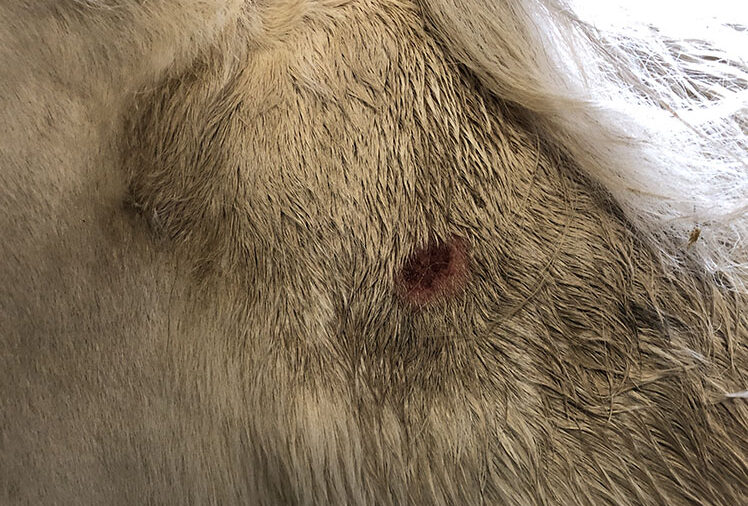
When winter arrives, our Falabellas develop their super-insulated winter coat. A healthy Falabella has a thick, shiny coat that lies evenly over its body. But then you'll notice your Falabella starts rubbing, searching for every possible spot in the stable and outside. This can lead to chafing, bald patches, and wounds. The warm, thick winter coat is an ideal hiding place for lice, making them difficult to detect.
It is best to part the coat a little in the warmest places, such as under the forelock and under the mane, and then look for small reddish-brown bugs or white dots, also called nits.
Some common biters include:
Falabellas are severely affected by these parasites, which are also contagious. It's important to intervene quickly and efficiently to prevent other Falabellas from becoming infected.
Combating lice and nits can be a challenging task, especially on a winter coat. Veterinarian treatments can help, but this must be repeated several times. Another option is to shave the Falabella, which prevents the parasites from hiding and makes treatment with sprays and baths easier. An alternative is diatomaceous earth, a natural product that can be powdered and massaged in, which dehydrates and kills lice.
It is important to take action as young animals can be weakened by a lice infestation and suffer permanent damage to the surface of their skin.

Welcome on the Facebookpage of Falabella Friends and MijnFalabella.nl | You can like this page if yo