
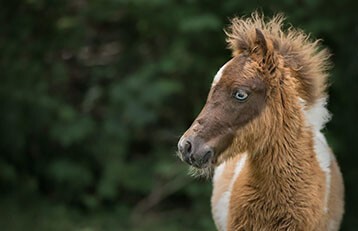
We usually begin lunging when a horse is three years old, as most horses are fully grown and mentally more stable at that point. The horse should be accustomed to being walked calmly by the hand, and when you first start, make sure there are not too many noises or stimuli in the immediate vicinity. There's often more relaxation after the horse has just eaten, and it's best to wait until after a mare's heat period.
You can lunge in a fenced outdoor or indoor arena. A fenced lunge ring is ideal, but that's not always available. Initially, horses will tend to follow the straight lines of an arena, seeking support from the fence.
To start with, all you need is a halter, a lunge line, a lunge whip and a lunge bit that is useful, so that you do not have to move the lunge line when changing hands (clockwise or anticlockwise).
Initially, walk the horse along the fence and gently introduce it to the lunge whip by stroking it gently over its body. Make sure you have the horse walk on both its left and right sides while you're doing this, so it receives equal weight on both sides. This variation in exercises is also important later in the training.
As you walk alongside the horse, gradually increase your distance by gradually releasing the lunge line, without letting it drag on the ground. Try to form a circle, also known as a volte. The horse will initially try to walk toward you, but then close the distance again, return to the fence's contact, and try to start the circle again. Your position relative to the walking horse should not be perpendicular, but slightly angled toward the horse's rear. .
When the horse walks smoothly on the circle, you can encourage it with your voice to trot or even canter. Regular lunging improves balance and muscle building, and lays the foundation for expanding into, for example, driving, or more strenuous training with double lunges, or simply connecting more effectively with your horse.

Welcome on the Facebookpage of Falabella Friends and MijnFalabella.nl | You can like this page if yo